Why Us
Eight ordinary promises, kept.
We do not have a swimming pool or a tennis court. We have eight things we do well, every week. These are them — in plain language, with the small print kept in.
What we do well
Eight features — not promises, just things you can come and watch on a Tuesday.
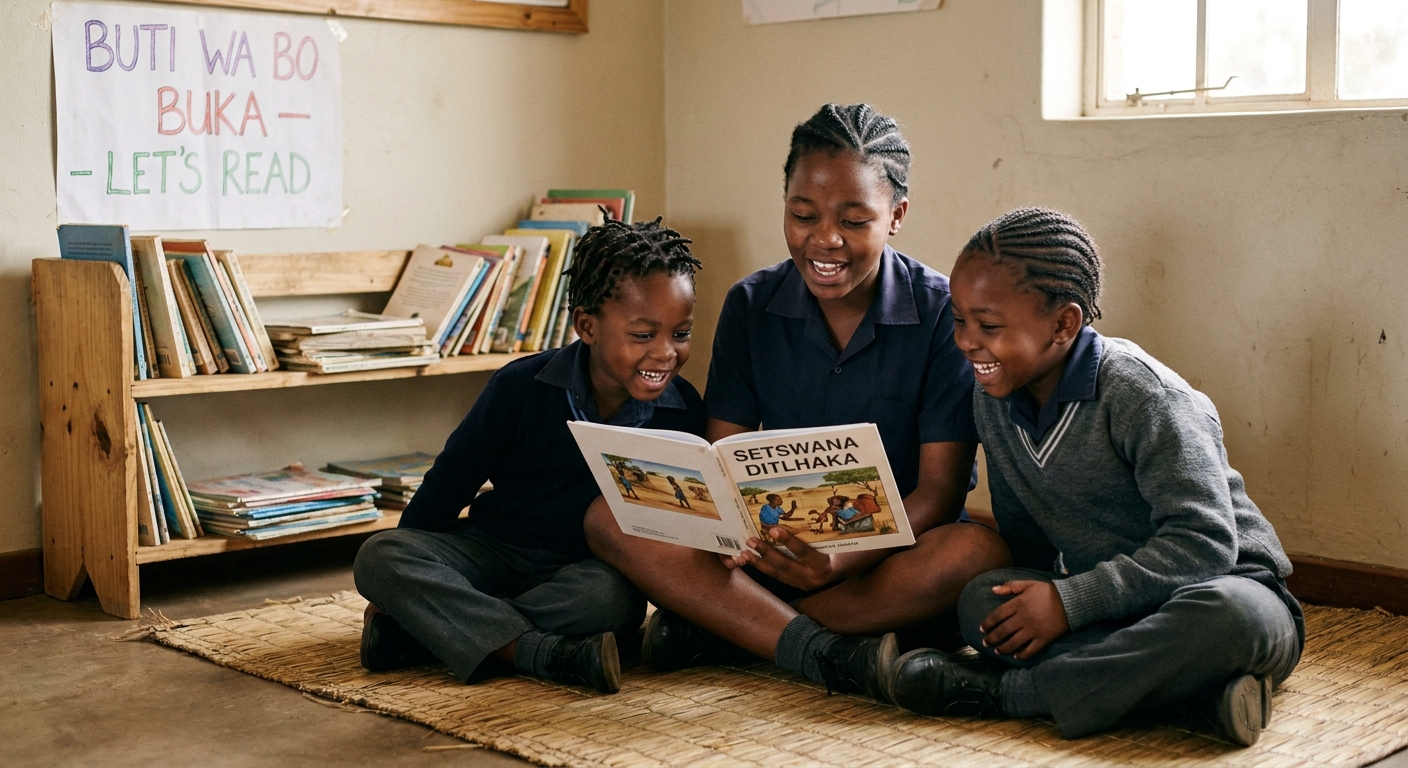
Reading culture
Twenty minutes of quiet reading, every school day.
Each classroom keeps a small library of donated and DBE-issued books in Setswana and English. Grade 6 learners pair with Grade 1 learners every Friday for ten minutes of one-to-one reading.
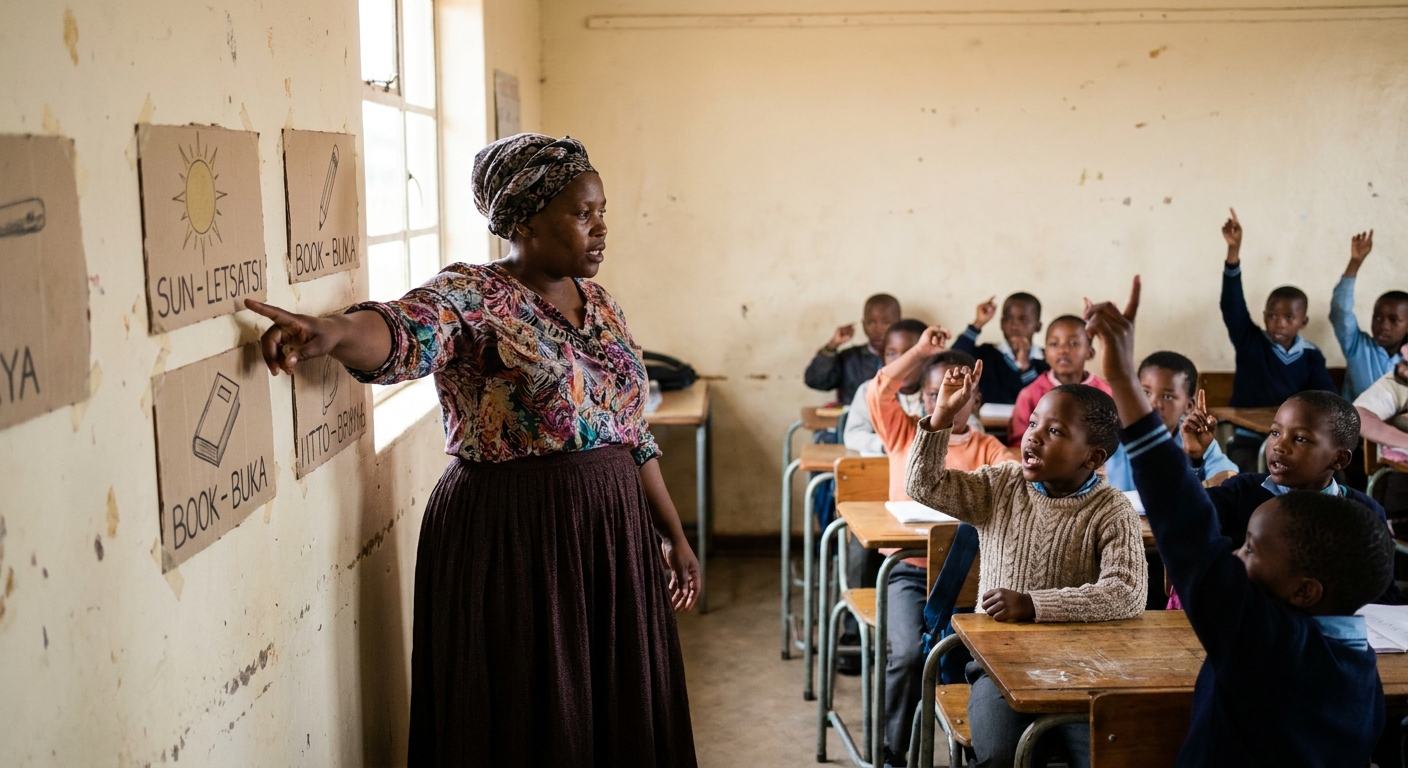
English from Grade R
Setswana home language, English additional, daily.
Children begin learning English through songs, games and picture books from Grade R. By Grade 4 the switch to English as the language of teaching is gradual, supported, and never sudden.
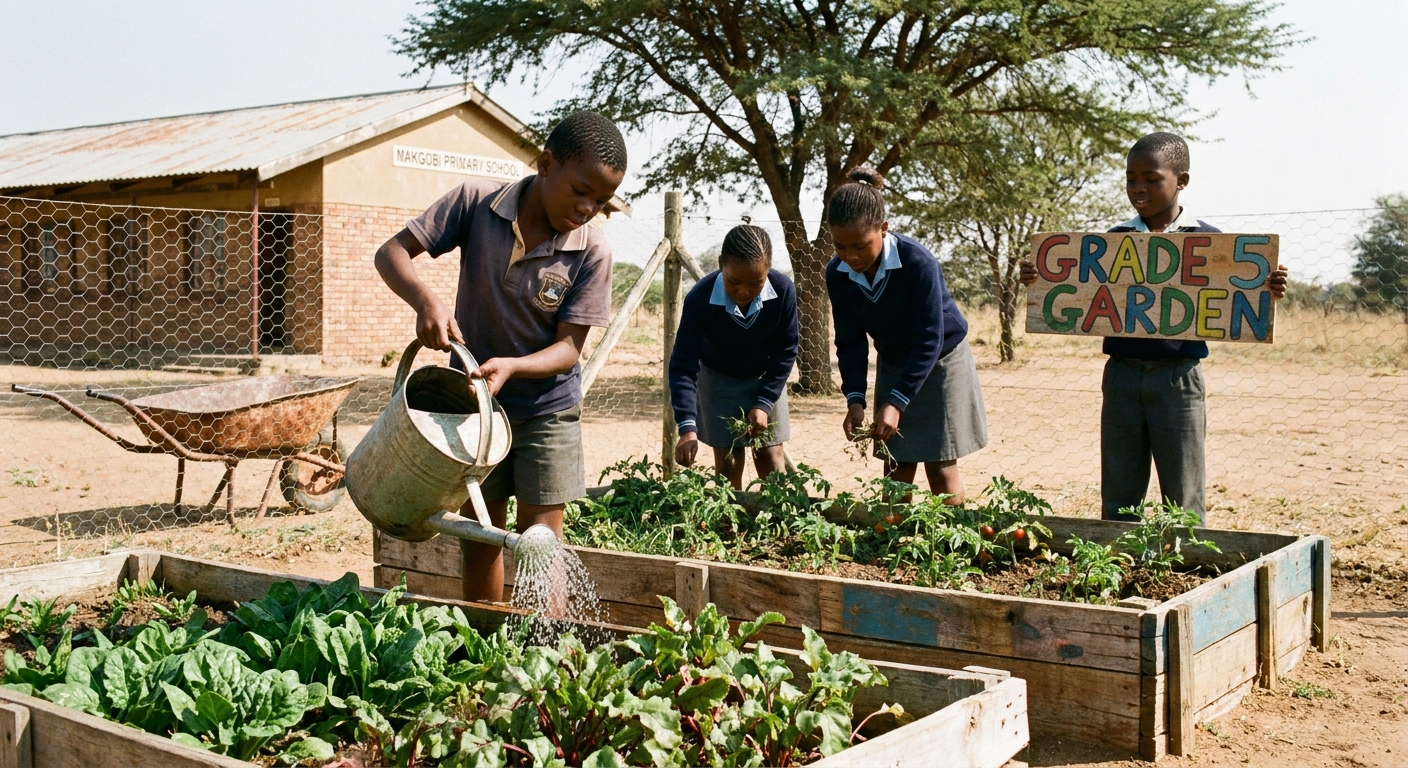
Food garden & NSNP kitchen
A hot meal at first break, every school day.
Through the National School Nutrition Programme we serve a balanced lunch on the yard. Spinach, beetroot and tomato come from the garden the Grade 5s tend — rotated weekly, watered each morning.
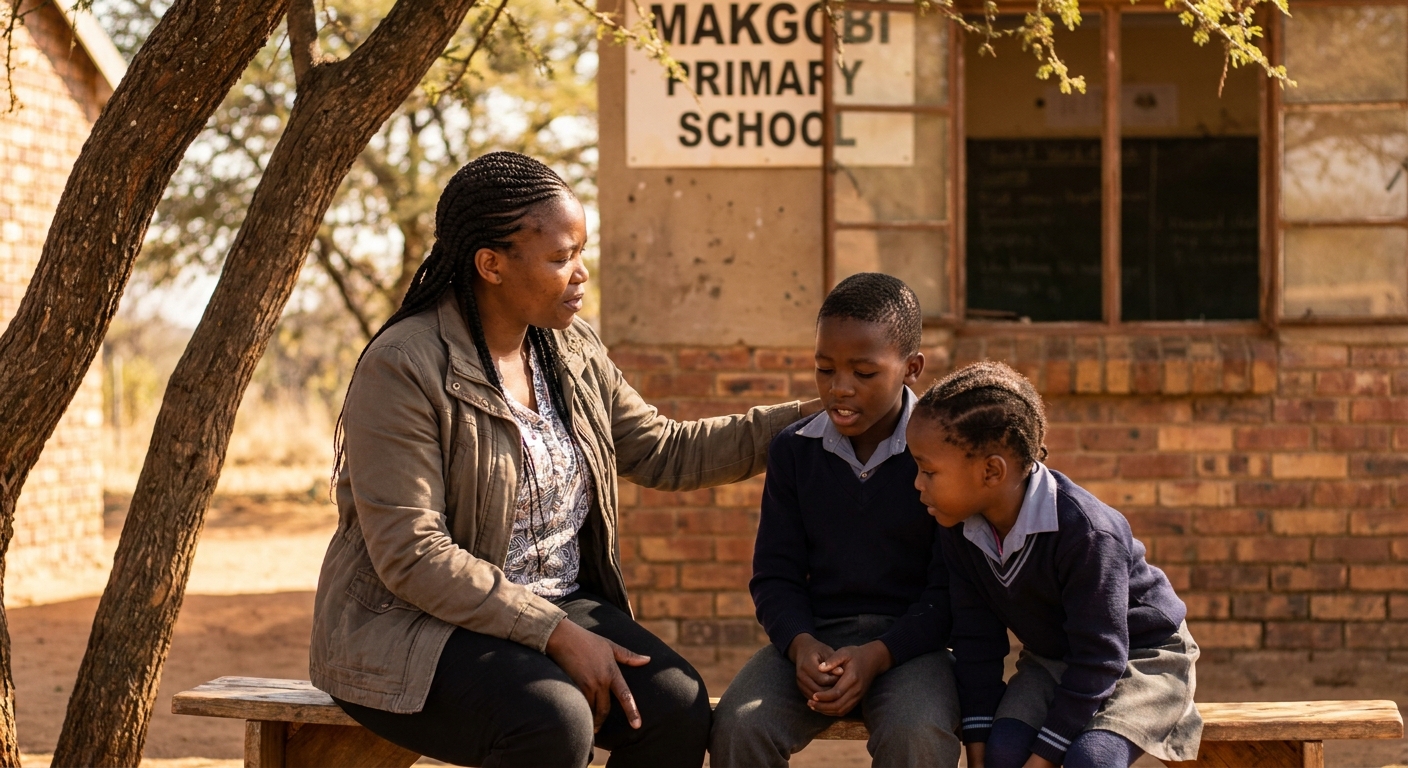
Wellbeing & care
A teacher who notices, a quiet bench, a phone call home.
No full-time counsellor — we are too small — but every educator is trained in basic psychosocial first aid through the SACE programme. We refer to the Mahikeng District clinic when needed and stay in the loop.
Family-school partnership
An elected SGB. Open gates. WhatsApp groups that work.
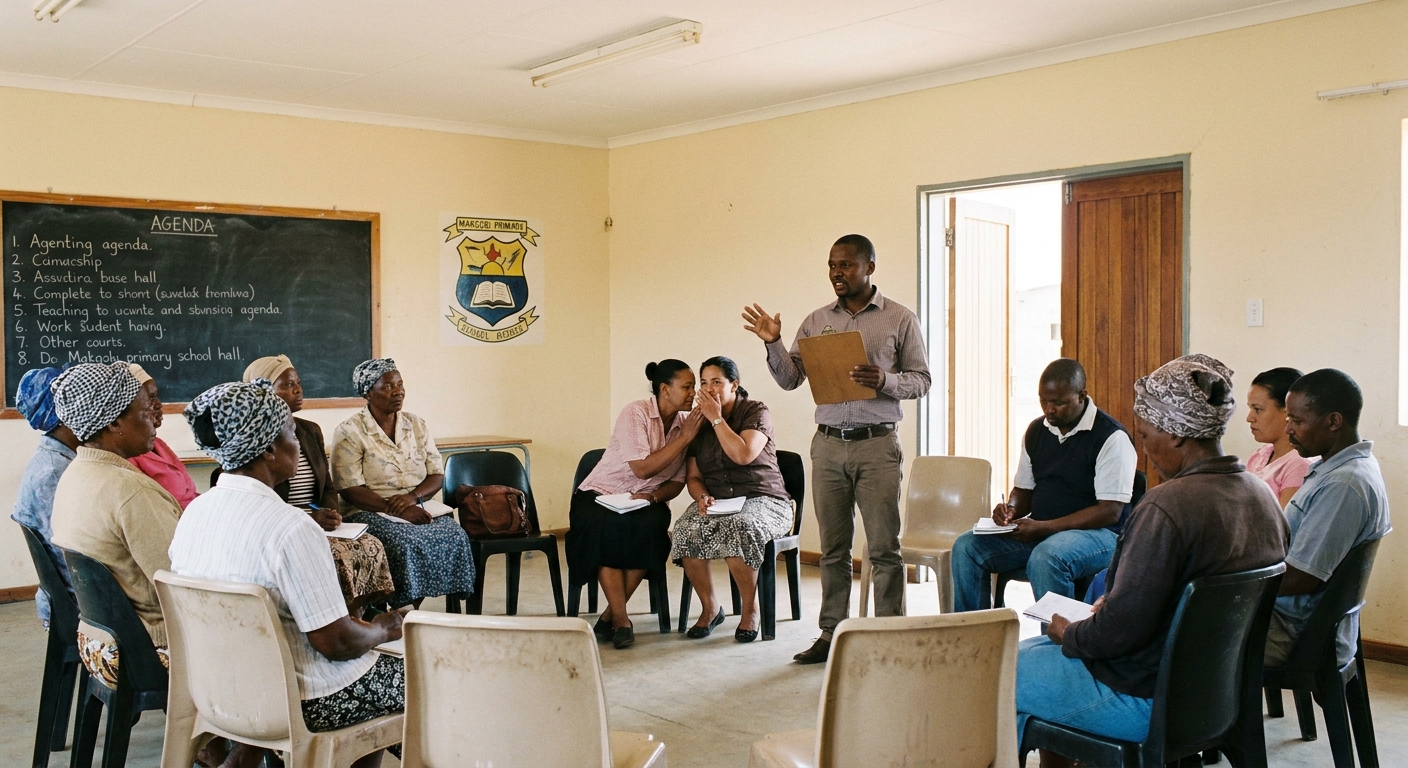
Parents elect the School Governing Body each year. Class teachers post weekly updates to the parent WhatsApp groups, and the principal holds Coffee Hour every Wednesday at 14h00. No appointment needed.
Local heritage curriculum
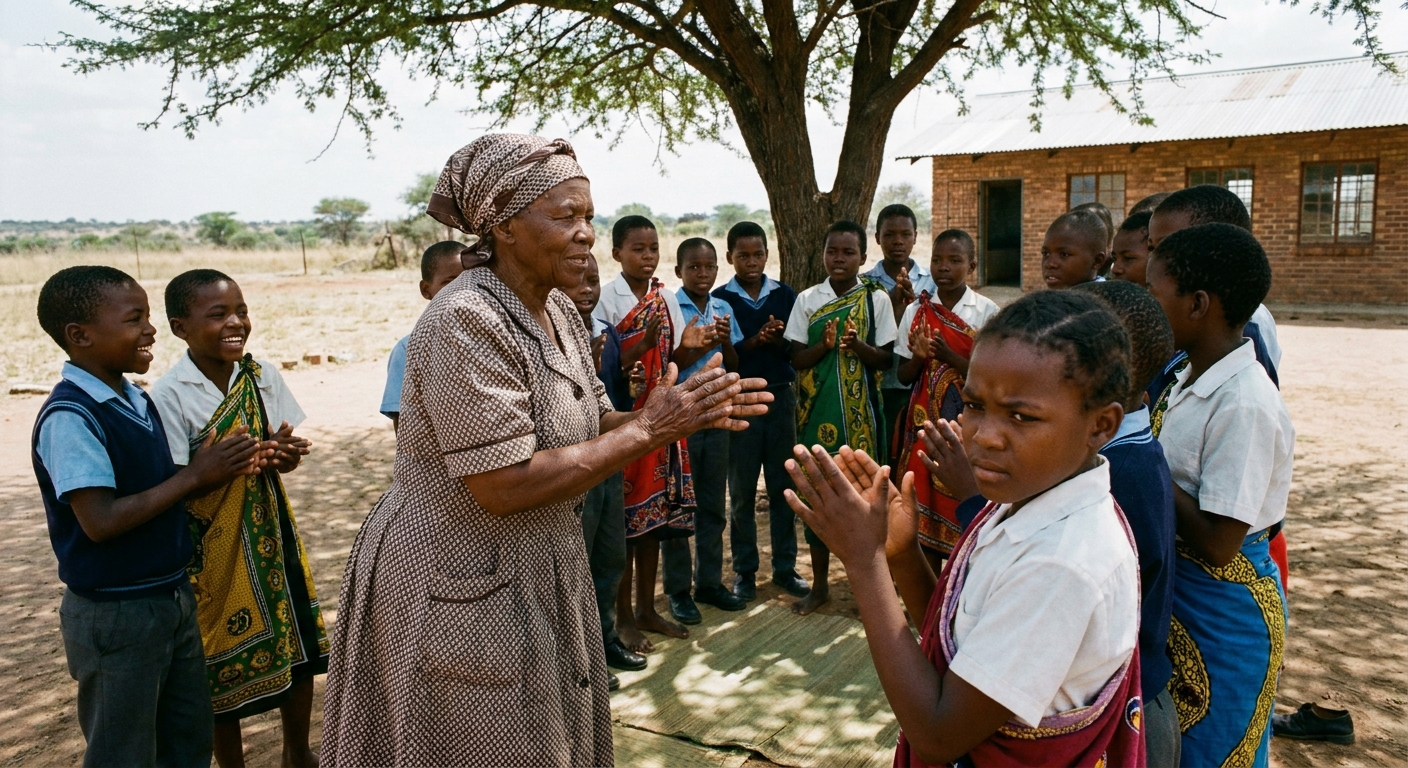
Setswana proverbs, Ngaka Modiri Molema history, Heritage Day choir.
Heritage is woven into Life Skills, History, and Creative Arts. We learn the names of local plants, the history of the chieftainship, and the songs our parents grew up singing — alongside the official curriculum.
Sport on the yard
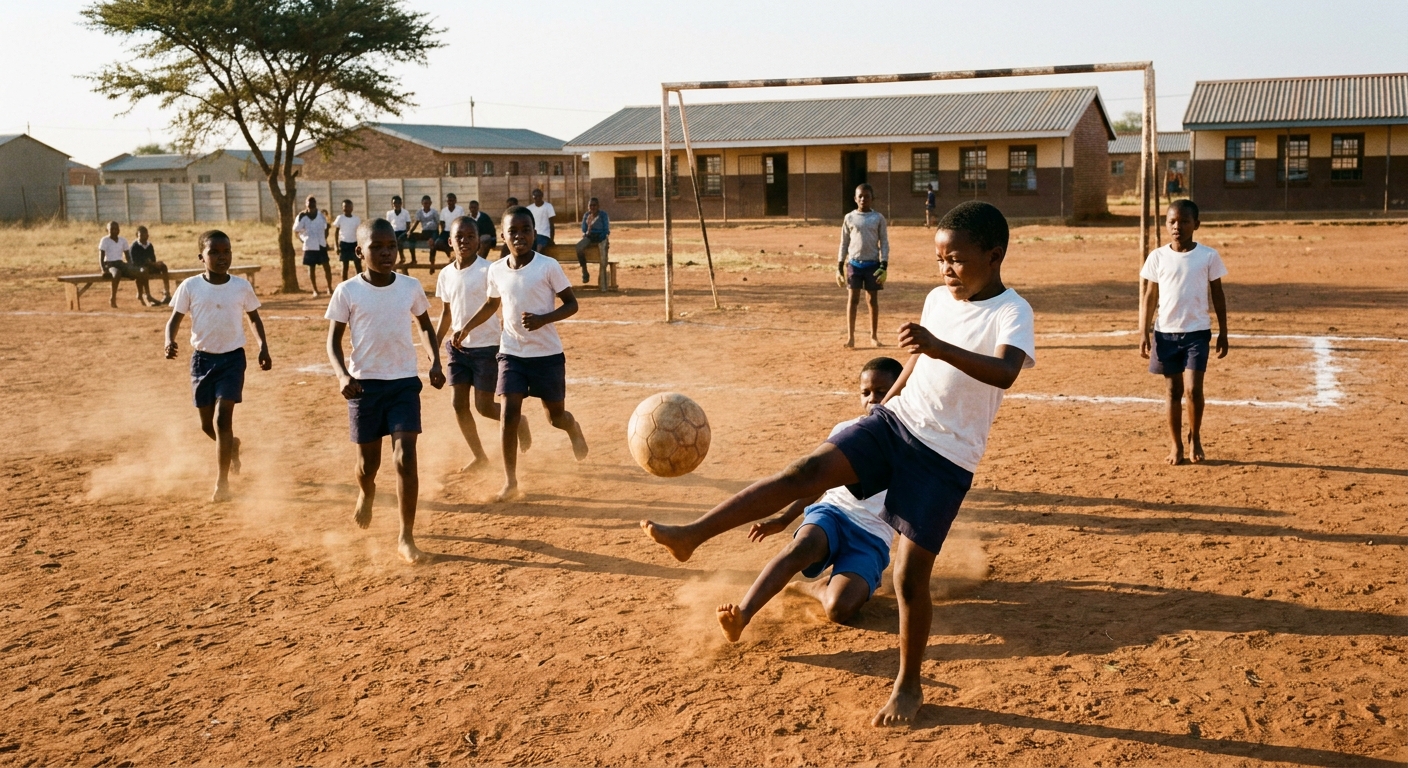
Soccer, netball, athletics — on a real, dusty field.
Our field is bare ground when it has not rained, and we play on it anyway. Inter-school athletics with neighbouring primaries every term, plus a friendly soccer league with three other village schools.
Outdoor & nature learning
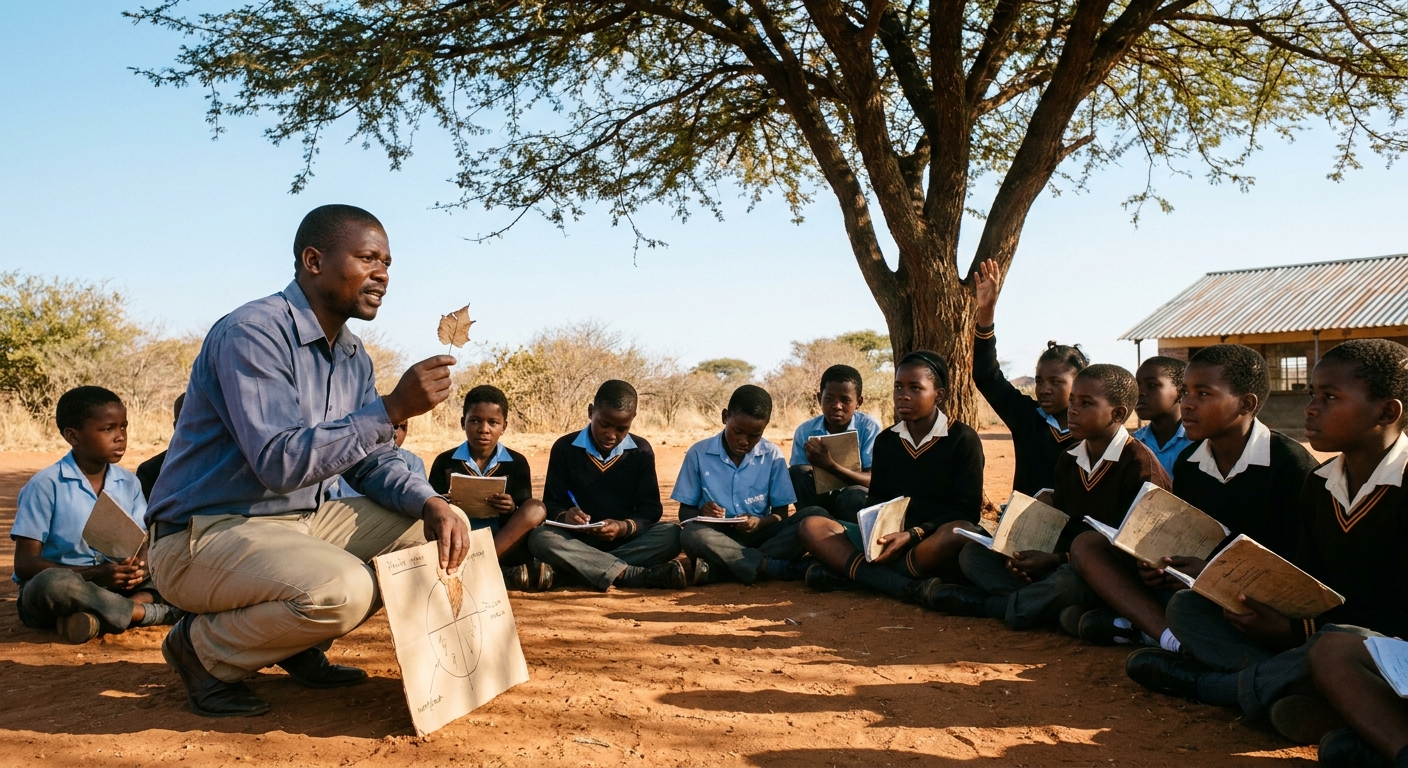
Lessons under the acacia. River walks twice a year.
When the classroom feels small we take the lesson outside. Grade 4–6 do an annual walk along the Setlagole River for Natural Sciences, learning to identify trees, birds and insects native to the North West.
“
A school is not a building — it is a habit a community keeps. Ours is to open the gate at half past seven, every weekday, no exceptions.
— SGB Chair, 2024
Safeguards
The boring details that keep a small school safe.
No private security guards, no fingerprint scanners. What we have is a fence, a register, a fire drill, and adults paying attention. Here is what that looks like in practice.
Campus access
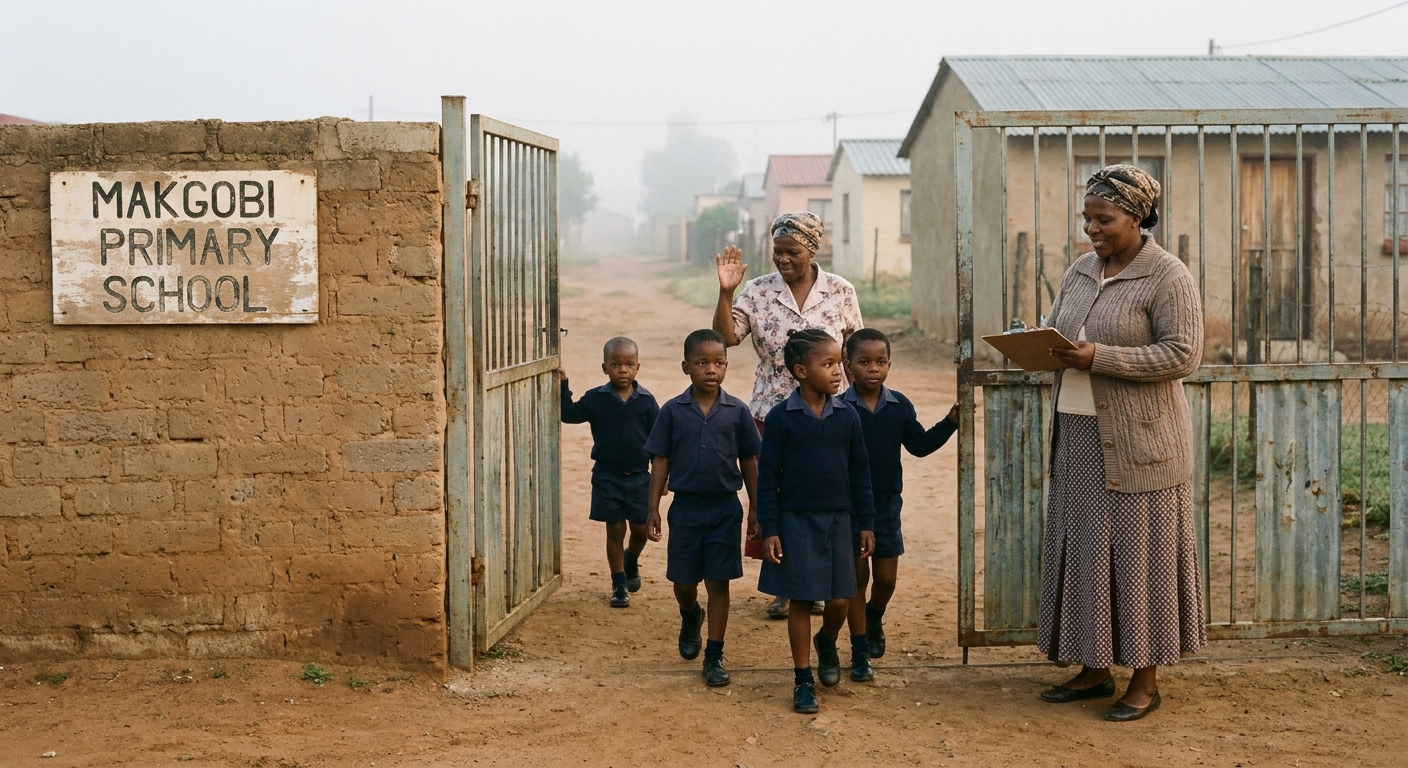
Single perimeter gate, opened 07h15–07h55 and 13h45–14h15. Visitors sign in at the office and wear a visitor sticker. Two duty teachers on the yard at every break.
Transport
The DBE Scholar Transport bus runs two routes from outlying farms in the morning and afternoon, with a registered driver and an SGB-appointed escort on every trip.
Nutrition (NSNP)
Menus follow the NSNP nutritional standard. Aunties working in the kitchen carry food handler clearances; ingredient deliveries are logged daily by the SGB nutrition convenor.
Health
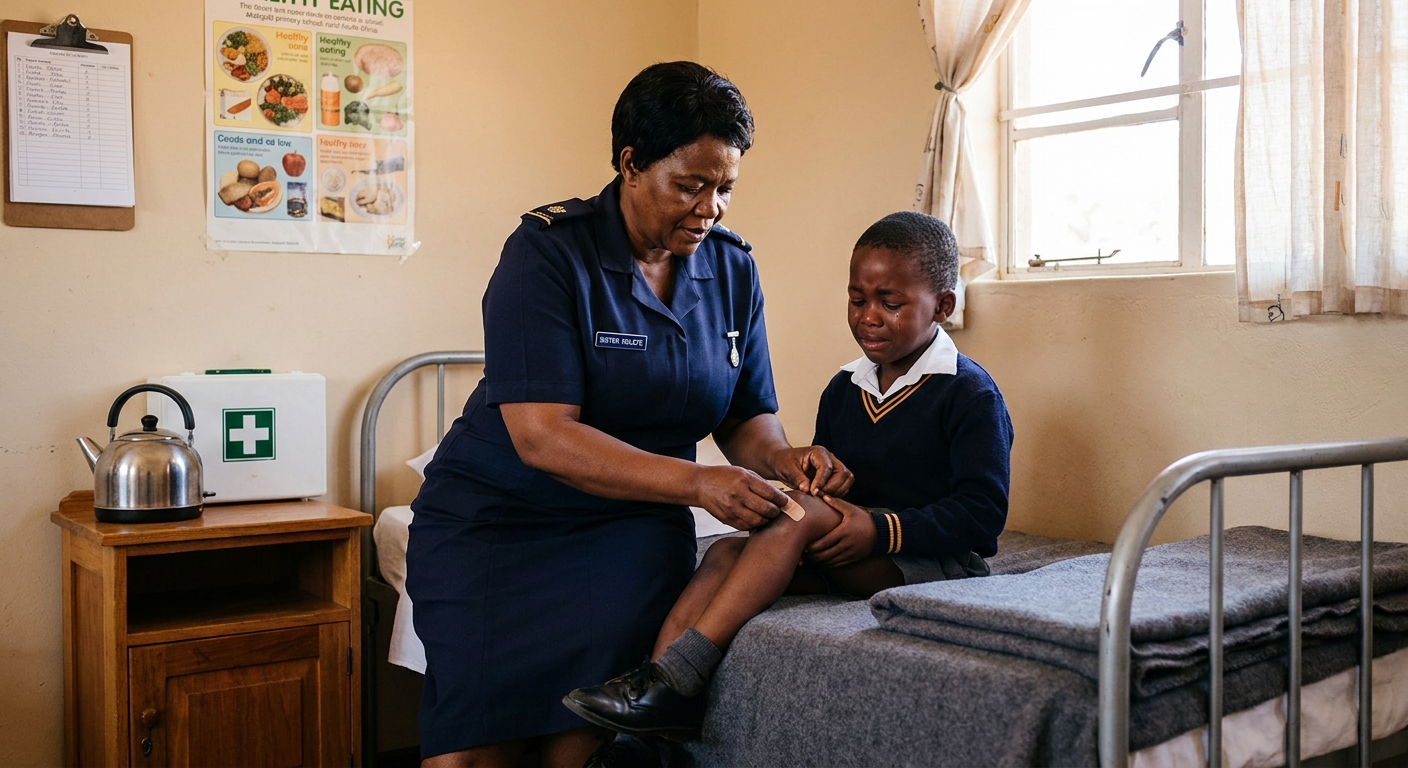
A small first-aid room with stocked supplies. Two educators are first-aid certified. The Makgobistad clinic is six minutes away by car and we can call an ambulance from the office line.
Wellbeing referrals
No on-site psychologist, but we have a memorandum with the District Health social worker and the local NGO Khumalo Wellbeing for free monthly group sessions on bullying, grief and adolescence.
Emergency drills
Fire and evacuation drills twice a term, signed off by the SGB safety convenor. Two extinguishers per classroom corridor, serviced annually. Emergency contact list on every classroom wall.