Our mission
To give every Makgobi learner a complete primary education — literacy, numeracy, life skills, and dignity — on the doorstep of their own village, taught in their own languages, by teachers they will see at the shop on Saturday.
About Us
Makgobi Primary opened its doors so that the children of Makgobistad would not have to walk to a town to learn. Decades on, the children still come, and we still walk out to meet them.
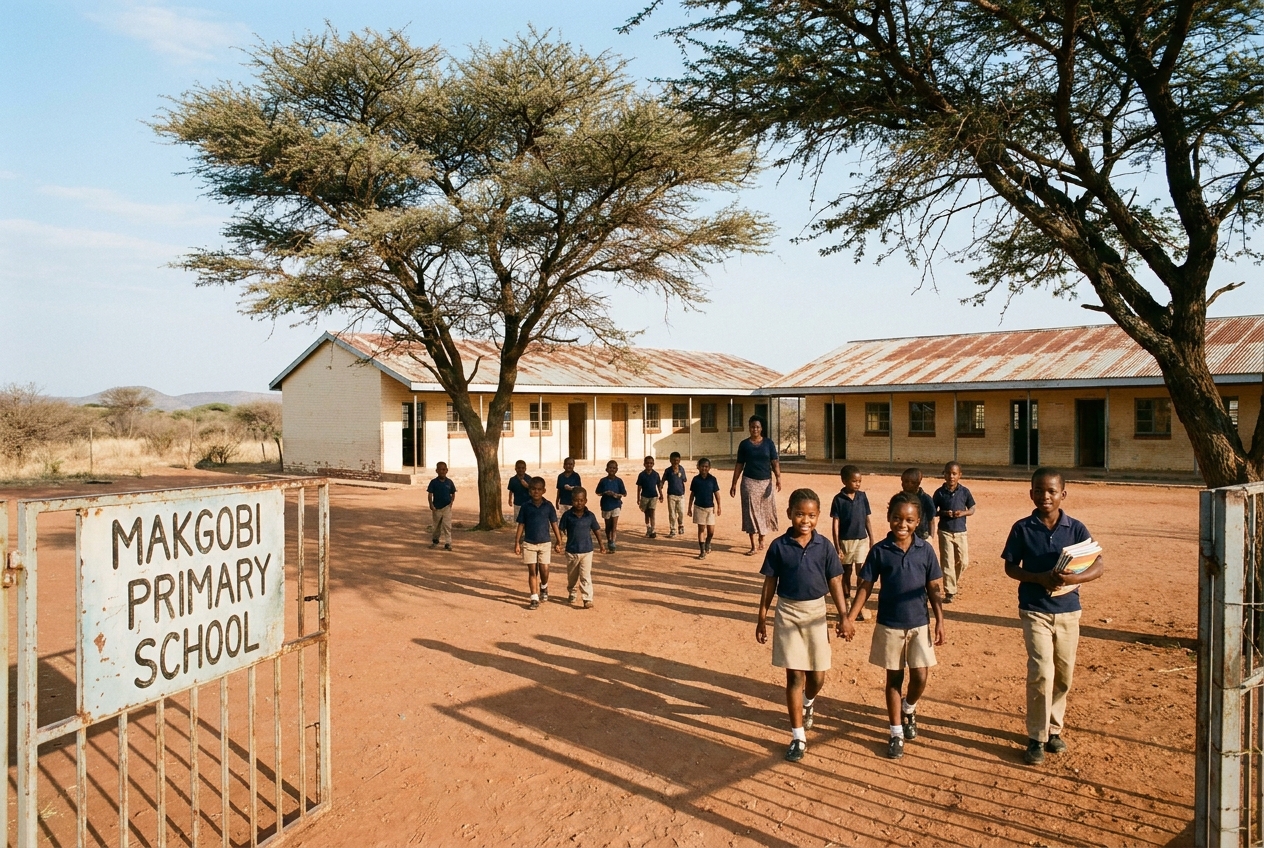
Makgobi Primary School sits at the edge of the village, a single-storey block of classrooms with a corrugated roof and a courtyard worn smooth by feet that have run across it for nearly fifty years. We are a Quintile 2 no-fee public primary, registered with the North West Department of Education in the Ngaka Modiri Molema district. Our NatEMIS number is 600 101 027 — an administrative line that means, simply, that this school is on the map.
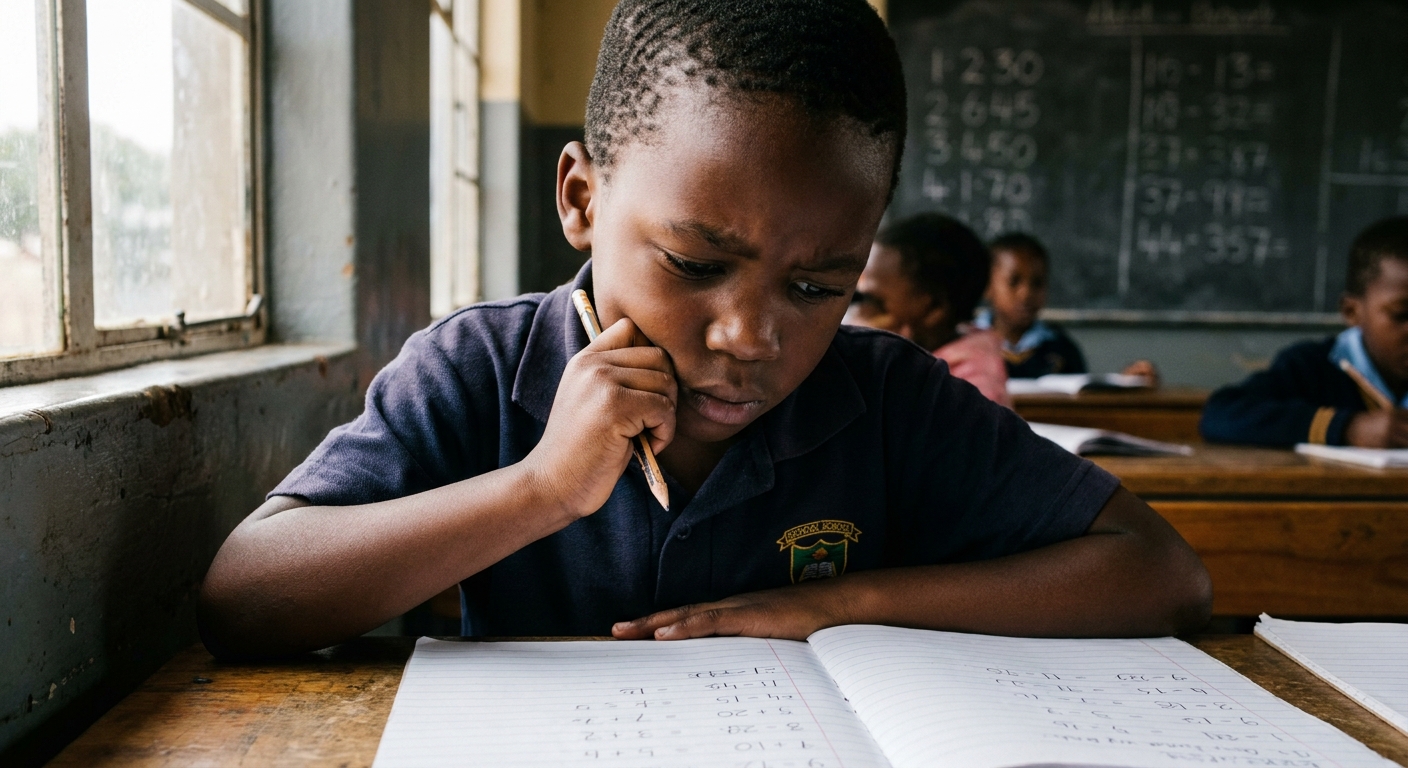
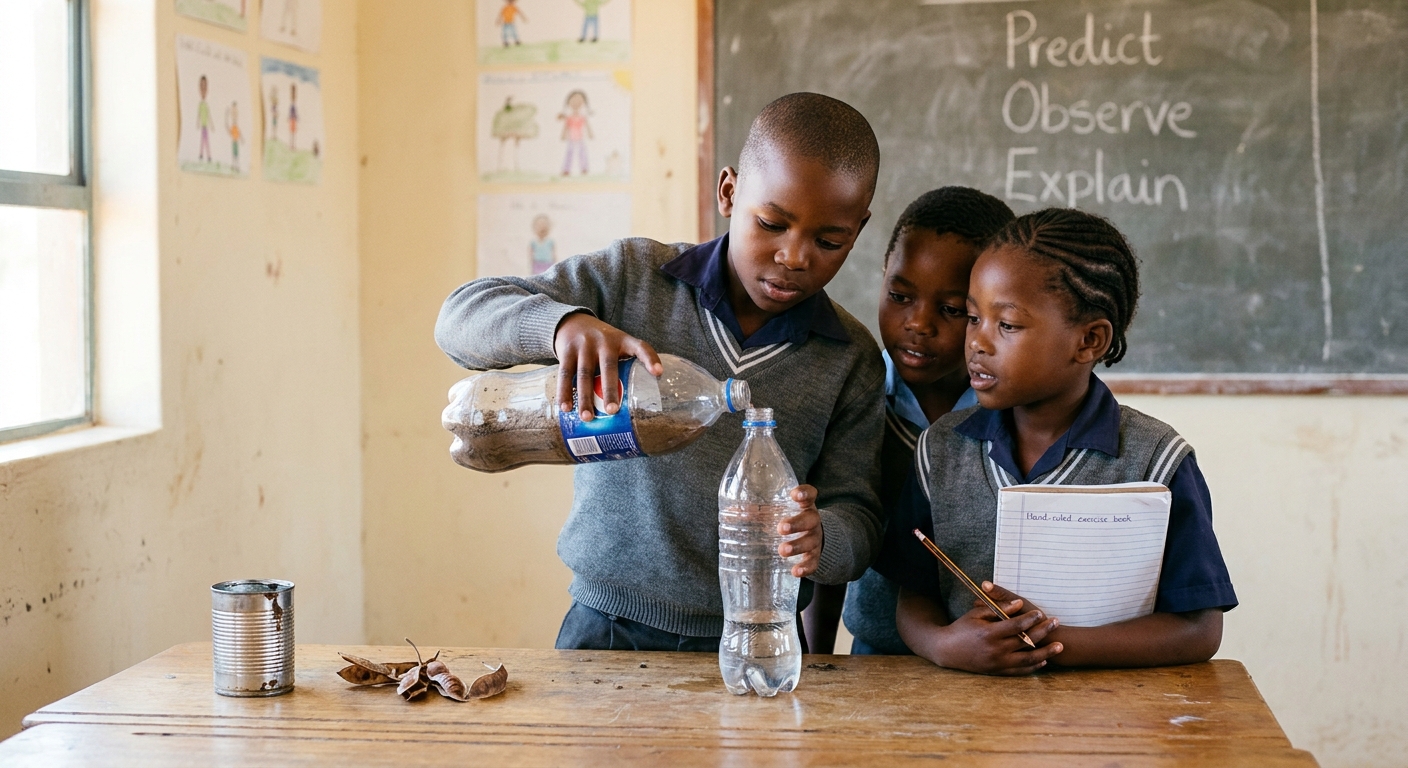
Two hundred and twenty-three learners arrive most mornings, by foot, by bakkie, by the bus that the SGB chairs spent three years applying for. Eight educators meet them at the gate. We teach the CAPS curriculum in three languages — Setswana as the home language for most, English as the additional language from Grade R, and a little Afrikaans. The National School Nutrition Programme keeps a hot pot on the kitchen stove every school day; for some of our learners, that plate is the reason the day works at all.
This is not a school with a glossy mission. It is a school with a daily one: to know each child by name, to see them learn something they did not know yesterday, and to send them home full — full of food, full of words, full of the quiet sense that someone noticed them.
Three short sentences. We repeat them to the children at the morning circle, and we repeat them to ourselves when a Tuesday is hard.
To give every Makgobi learner a complete primary education — literacy, numeracy, life skills, and dignity — on the doorstep of their own village, taught in their own languages, by teachers they will see at the shop on Saturday.
A village where the path from Grade R to high school is well-walked and well-lit. Where children leave us as confident readers, careful thinkers, and kind classmates — and where their younger brothers and sisters cannot wait to follow.
Botho — we treat each other as people first. Steady work — small effort, every day, beats the brilliant flash. Open gates — parents, grannies, and aunties are welcome on the yard, not visitors to it.
Makgobi was built in the 1970s by families who pooled money for cement and roofing sheets so their children would not have to walk to Mahikeng for school. The first classroom was one room with a chalkboard nailed to the wall.
That kind of beginning sets a habit. Today the School Governing Body is still elected by parents and grandparents, the kitchen is still run with help from local aunties on a roster, and the school food garden is still weeded, in part, by Grade 6 hands. We do not have a foundation in another country. We have a community. It has held.
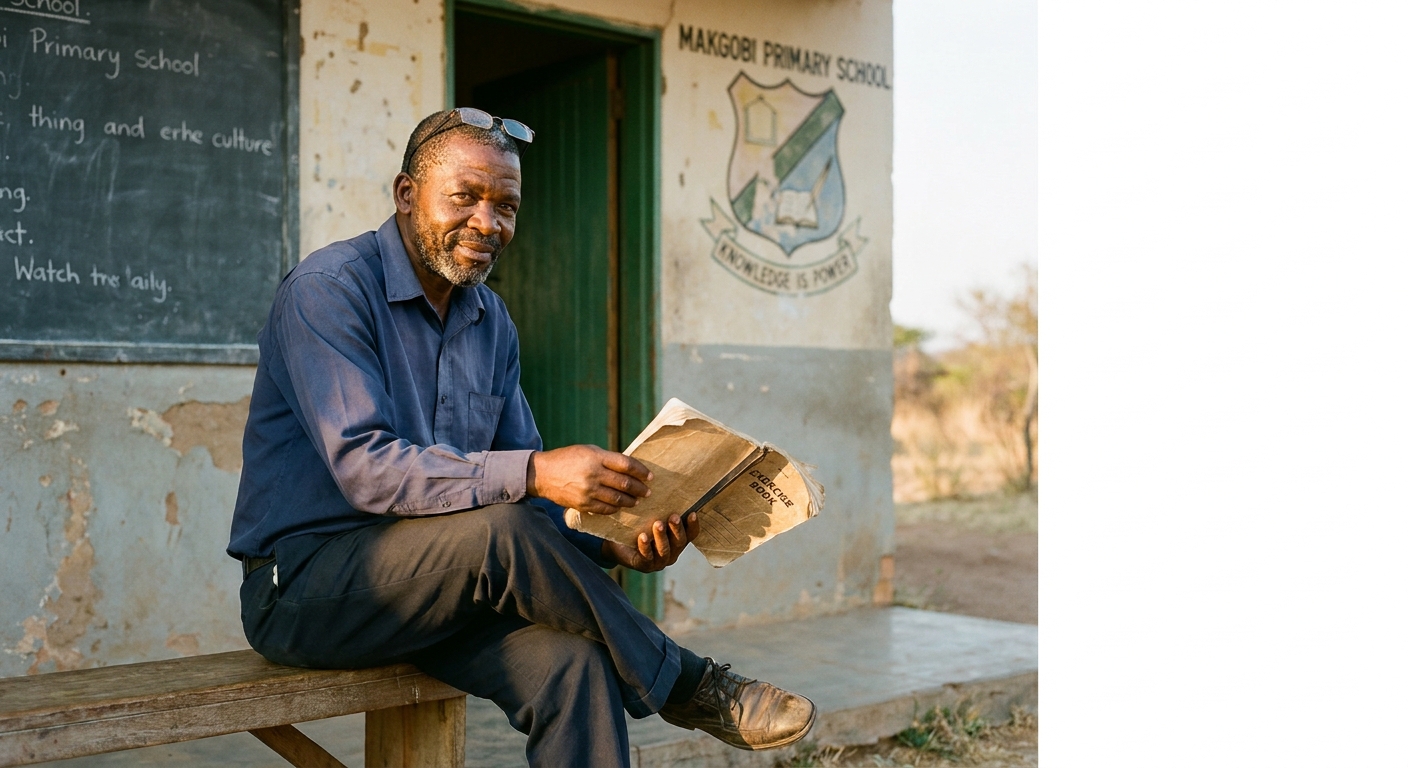
Mr. Tebogo Marumo has been at Makgobi for sixteen years — the last seven as principal. He answers his own phone. He knows which Grade 1 learner does not eat breakfast at home and which Grade 6 learner is responsible for fetching water before school.
“A small school is not a small job,” he says. “You see the same child for seven years. You see what works. You also see what you missed. So you go back, and you try it again, and you do not pretend the children are someone else’s.”