Academics

CAPS curriculum, three languages, and a slow lunch.

From Grade R through Grade 7 we follow the national CAPS curriculum, taught in Setswana and English with Afrikaans as a third language. Below is what each subject actually looks like at Makgobi.

Curriculum

Six subjects, one school day, eight teachers carrying it.

In a small school every educator teaches across grades. Below are the six CAPS learning areas and how they actually run on our timetable — the goal, the method, a real project, and how we know whether a child is getting it.

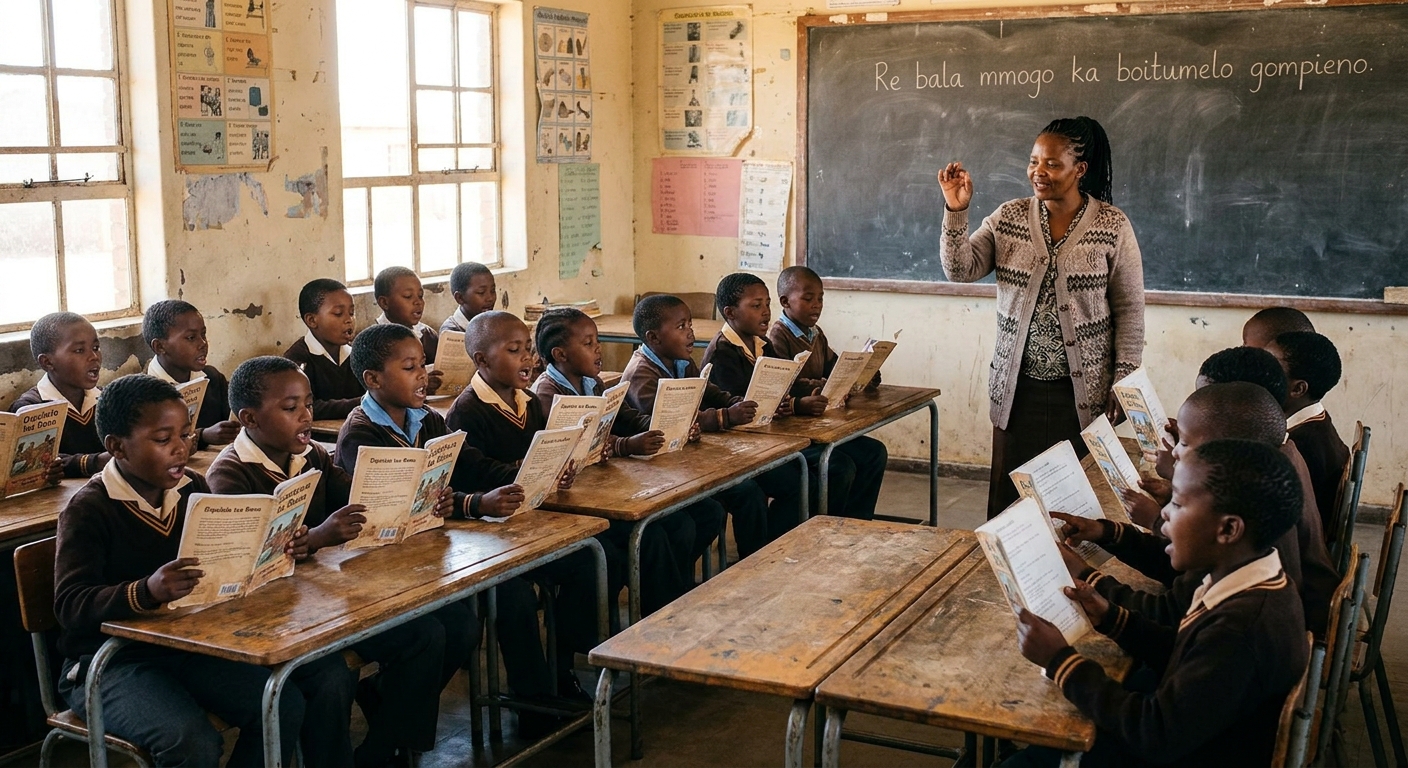
Class reading aloud from a Setswana storybook

Languages

Setswana · English · Afrikaans
GoalConfident readers in their home language; comfortable English speakers, listeners and writers by Grade 7.
MethodPhonics-first in Foundation Phase, paired reading from Grade 3, oral storytelling and weekly journal writing.
Project“Sephiri sa Makgobi” — Grade 5 collects and writes down stories from village elders, in Setswana then translated to English.
AssessmentTermly oral, written, and reading-aloud assessments. Portfolio of handwriting and creative writing pieces.
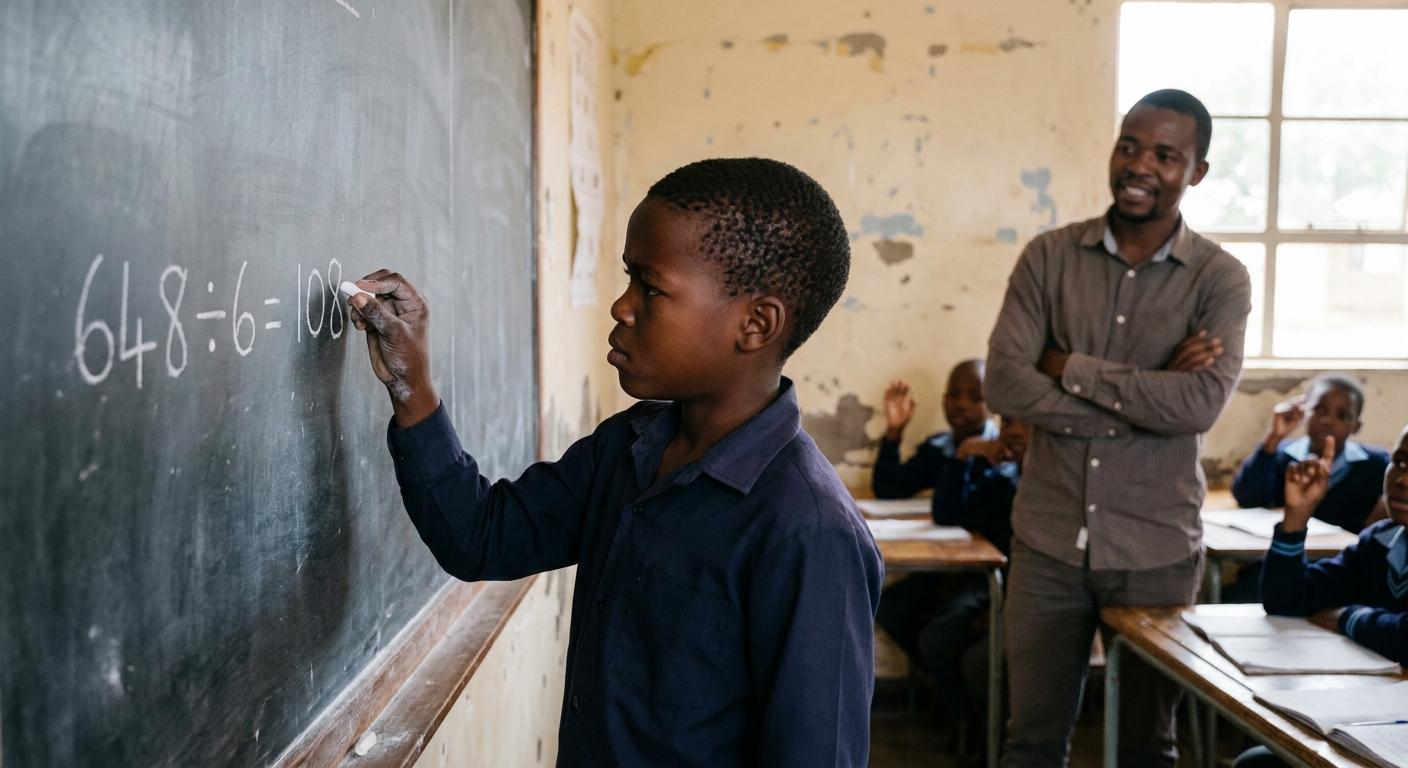
Children working through maths sums on the chalkboard

Mathematics

Foundation → Senior
GoalNumber sense before tricks. Children should be able to explain why an answer is right, not just remember it.
MethodConcrete-Pictorial-Abstract: bottle caps and stones first, drawings second, symbols last. Daily mental maths.
ProjectGrade 6 “Tuck-shop Maths” — learners run the Heritage Day food stall, doing real change-making and stock counting.
AssessmentWeekly mental maths sprint + termly written test. Diagnostic interviews for any learner falling behind.
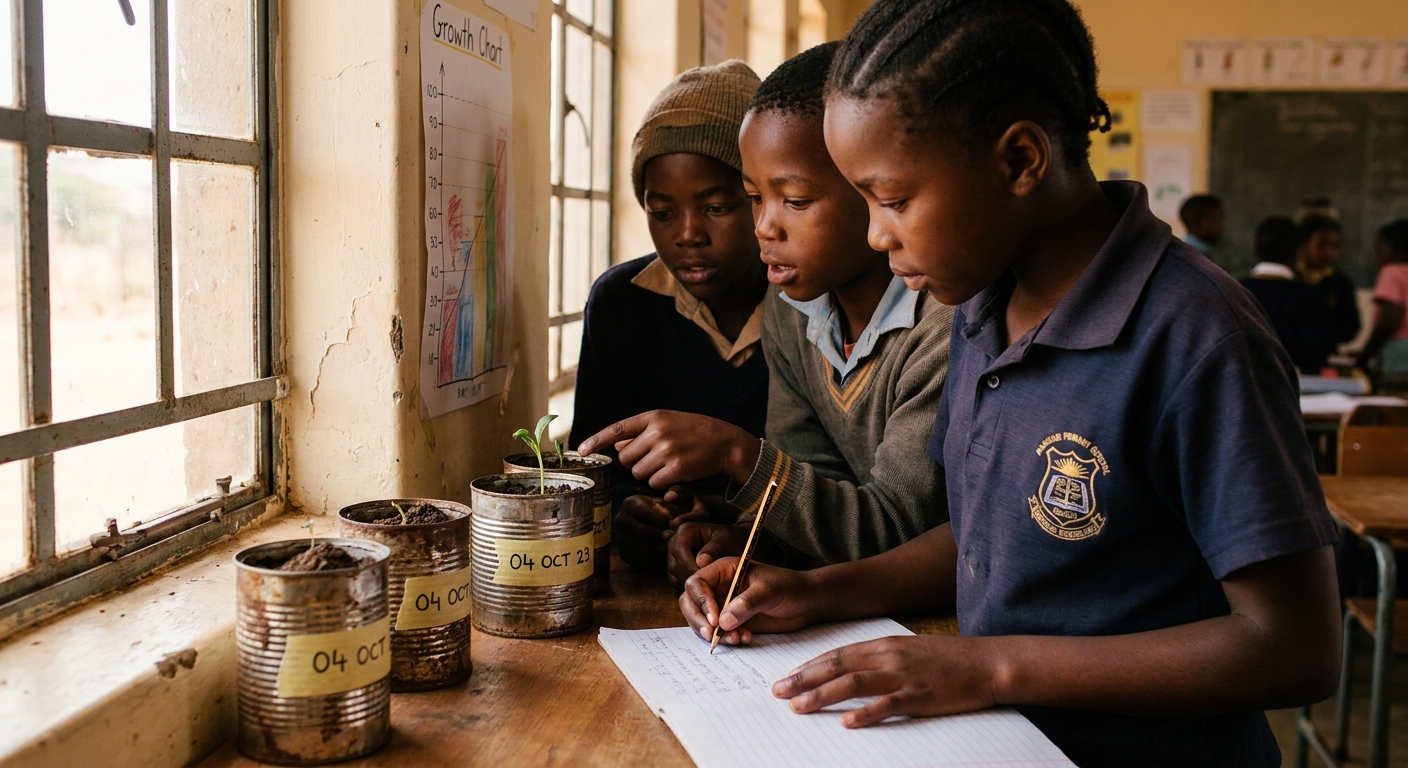
Pupils observing growing seedlings on the windowsill

Natural Sciences & Technology

Inquiry-led
GoalChildren who ask “how come?” and know how to look it up, test it, and explain what they found.
MethodPredict-Observe-Explain. Field walks. Working with what we have — bottles, soil, seeds, sunlight.
ProjectGrade 5 measures rainfall in the food garden weekly for a year, and presents a poster on planting cycles.
AssessmentPractical task per term, plus a written end-of-term assessment. Portfolio of experiment write-ups.
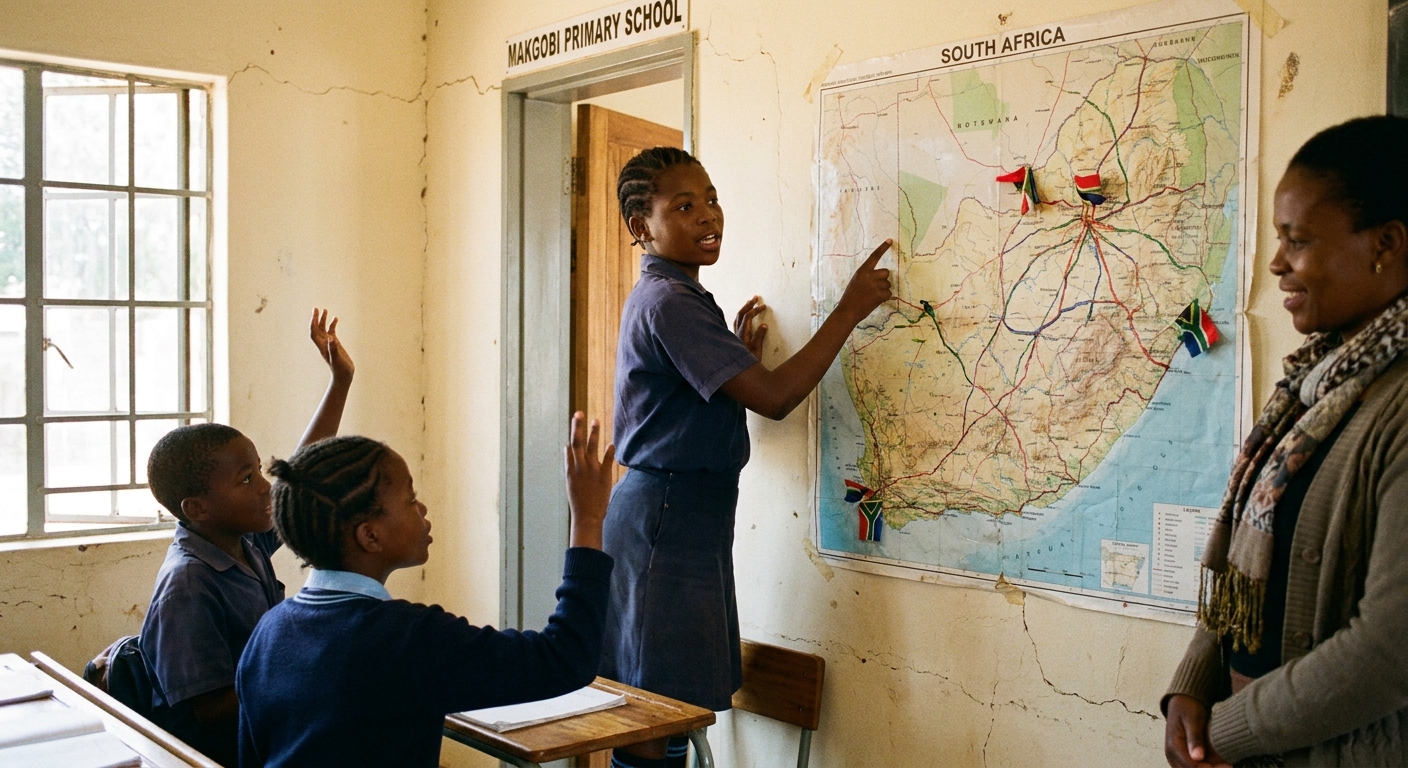
A wall map of South Africa with children pointing at it

Social Sciences

History · Geography
GoalChildren who know where they live, where their grandparents lived, and how the country they belong to came to be.
MethodMap work, oral history interviews, photo timelines, museum visits when transport is available.
ProjectGrade 6 “Where I’m From” — family tree project across three generations, presented at parent evening.
AssessmentSource-based written tasks, project-based assessment, and termly oral.
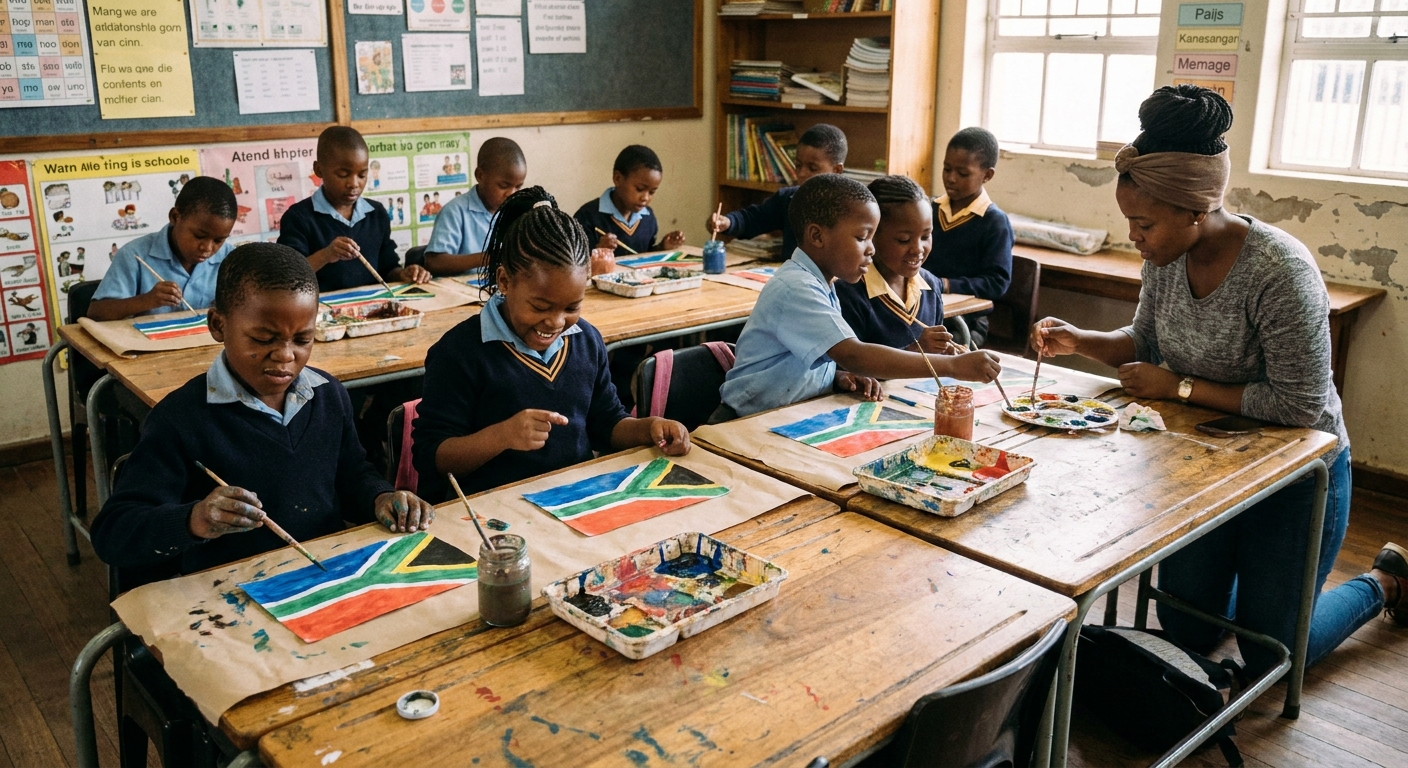
Group of children doing a creative arts activity with paper and paint

Life Skills

PSW · PE · Creative Arts
GoalA whole child — healthy in body, settled in feelings, brave with paint, paper, and a recorder.
MethodPersonal & Social Wellbeing circle time, twice-weekly PE on the yard, weekly art and music with shared instruments.
ProjectHeritage Day choir performance and an inter-grade poetry slam every Reading Month (September).
AssessmentContinuous, observation-based. We watch the child do the thing, and we describe it — not score it.
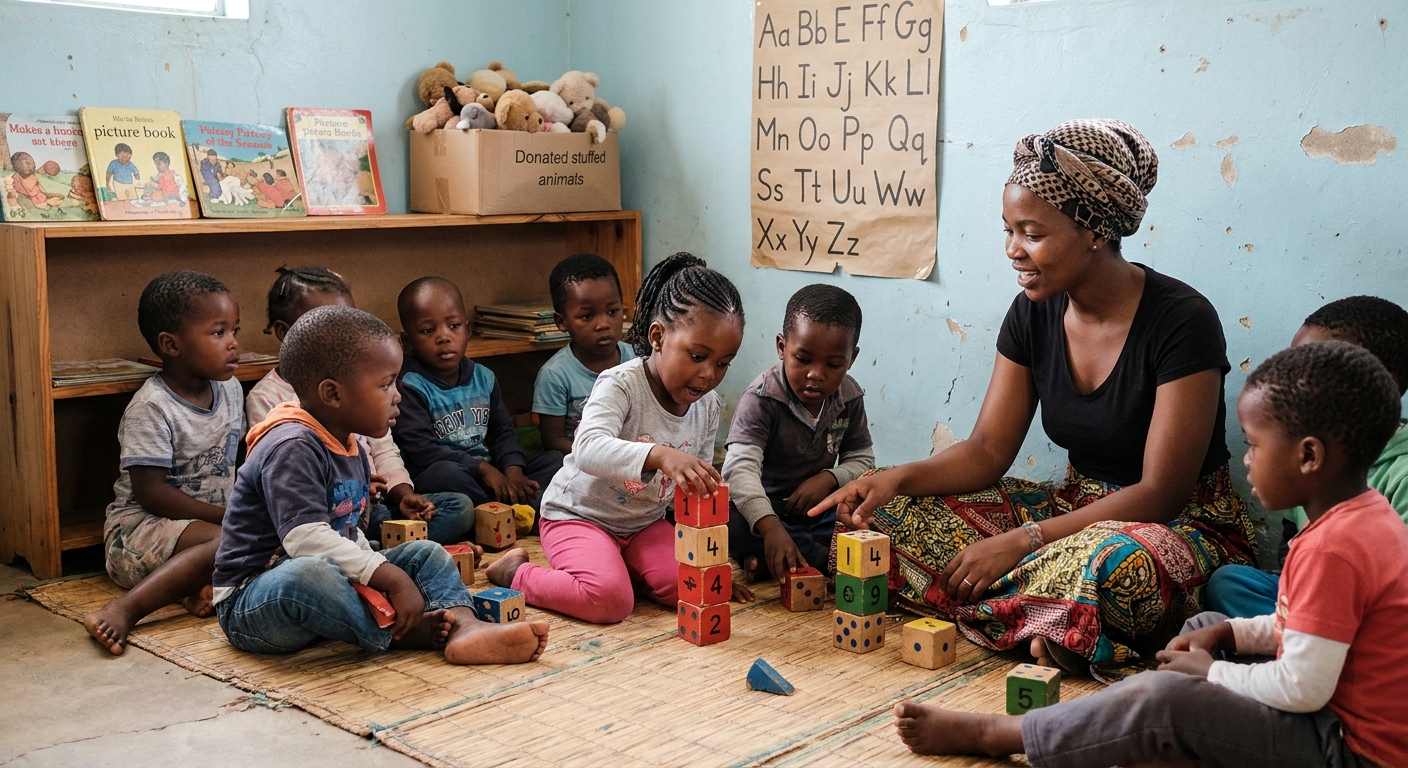
Grade R children playing with counting blocks on a mat

Grade R Foundations

Reception year
GoalA gentle landing into school: routines, the sound of one’s name, holding a pencil, and counting up to twenty.
MethodPlay-based learning, songs and rhymes in Setswana and English, large-motor outdoor time twice a day.
Project“My family in pictures” — each Grade R learner takes a photo home for parents to caption together.
AssessmentObservation checklists; no scored tests. Conversation with parents at the end of each term.

From Grade 1 to Grade 6 — what we hope each year quietly does

Gr 1

Settles into school routine. Knows letter sounds and counts to 50. Can write own name.

Gr 2

Reads short Setswana sentences aloud. Adds and subtracts within 100. Tells their own story.

Gr 3

Reads a chapter on their own. Times tables to 10. Begins simple English conversation.

Gr 4

Switches to English as language of teaching with support. Writes a paragraph. Long division.

Gr 5

Researches and presents a project. Comfortable with fractions. Reads for pleasure.

Gr 6

Writes a multi-paragraph essay. Solves real-world maths problems. Mentors a Grade 1 reader.

A typical day

From the gate at 07h50 to the last bus at 14h30.

Hover a stop on the timeline to see what is happening at that hour. After-care for working parents runs until 16h00 on a roster basis — arranged through the SGB, free of charge.

07:50

Gates open

Duty teachers greet learners by name. Late arrivals signed in at the office.

08:00

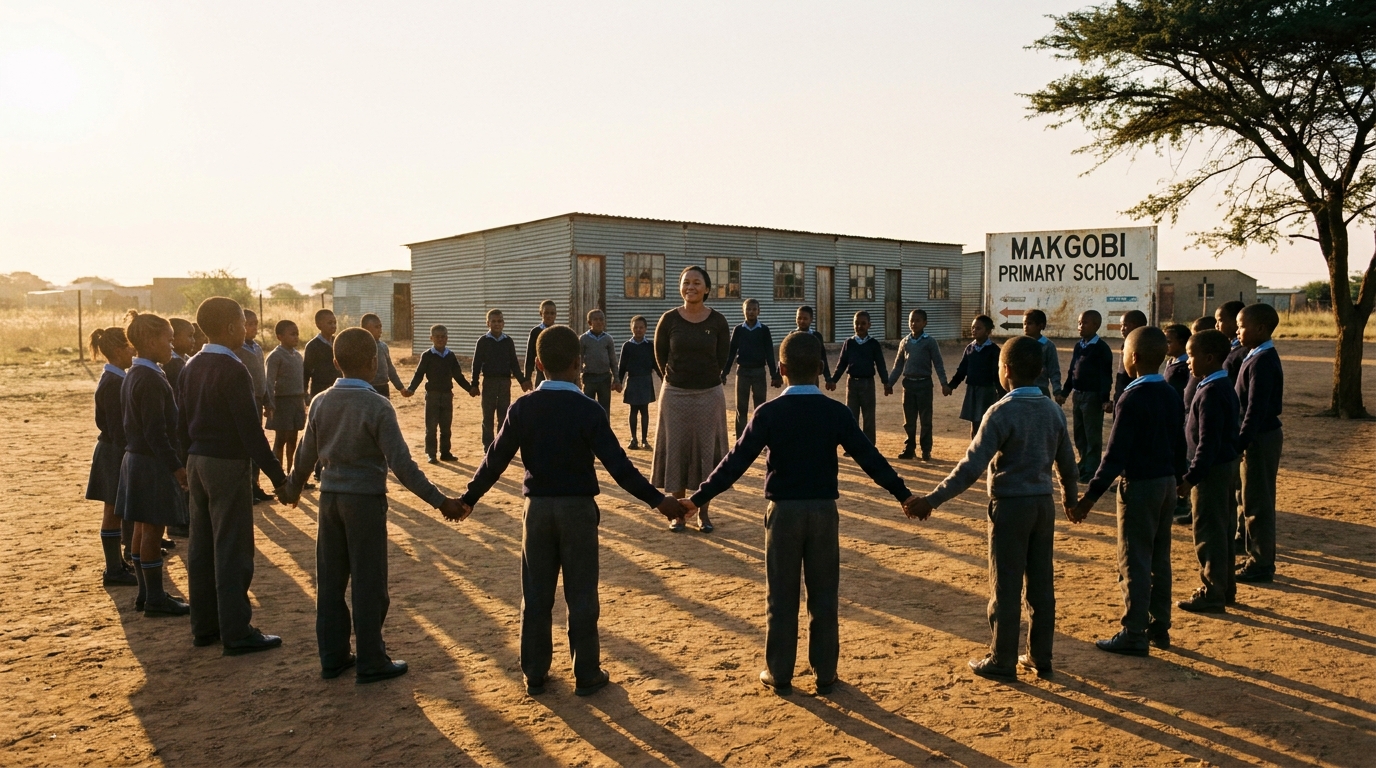
Morning circle

Each class begins with a check-in: how the morning was, who needs anything.

08:20

Assembly

Whole-school assembly outside, with notices, a song, and a reading from a learner.

08:40

Periods 1–3

Two language periods and a maths period for most grades. Quick break at 10h00.

11:00

First break & meal

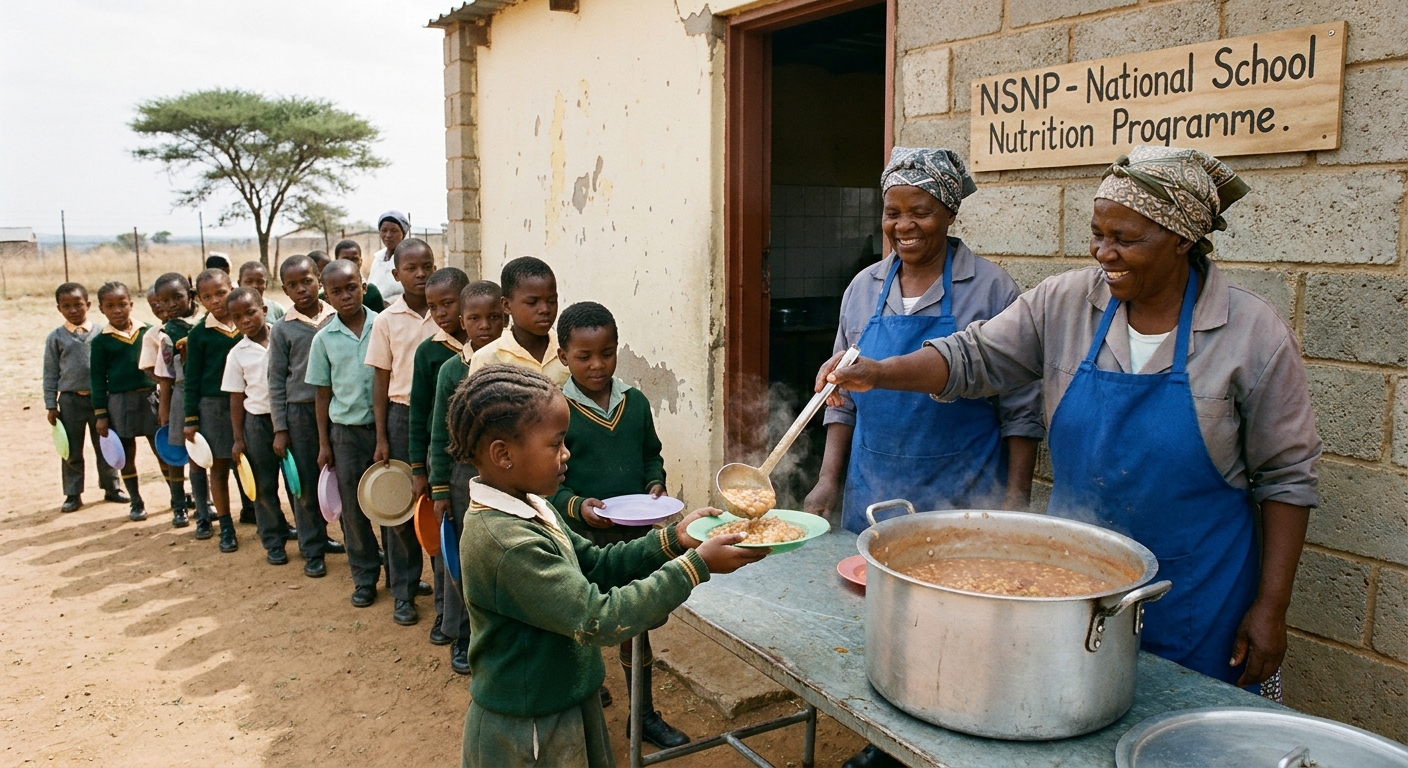
NSNP hot lunch served. Children eat under the trees or in the dining shelter.

11:30

Quiet time

Twenty minutes of silent reading or rest. No phones, no shouting.

11:50

Periods 4–6

Natural Sciences, Social Sciences and Life Skills run in afternoon blocks.

14:00

Clubs

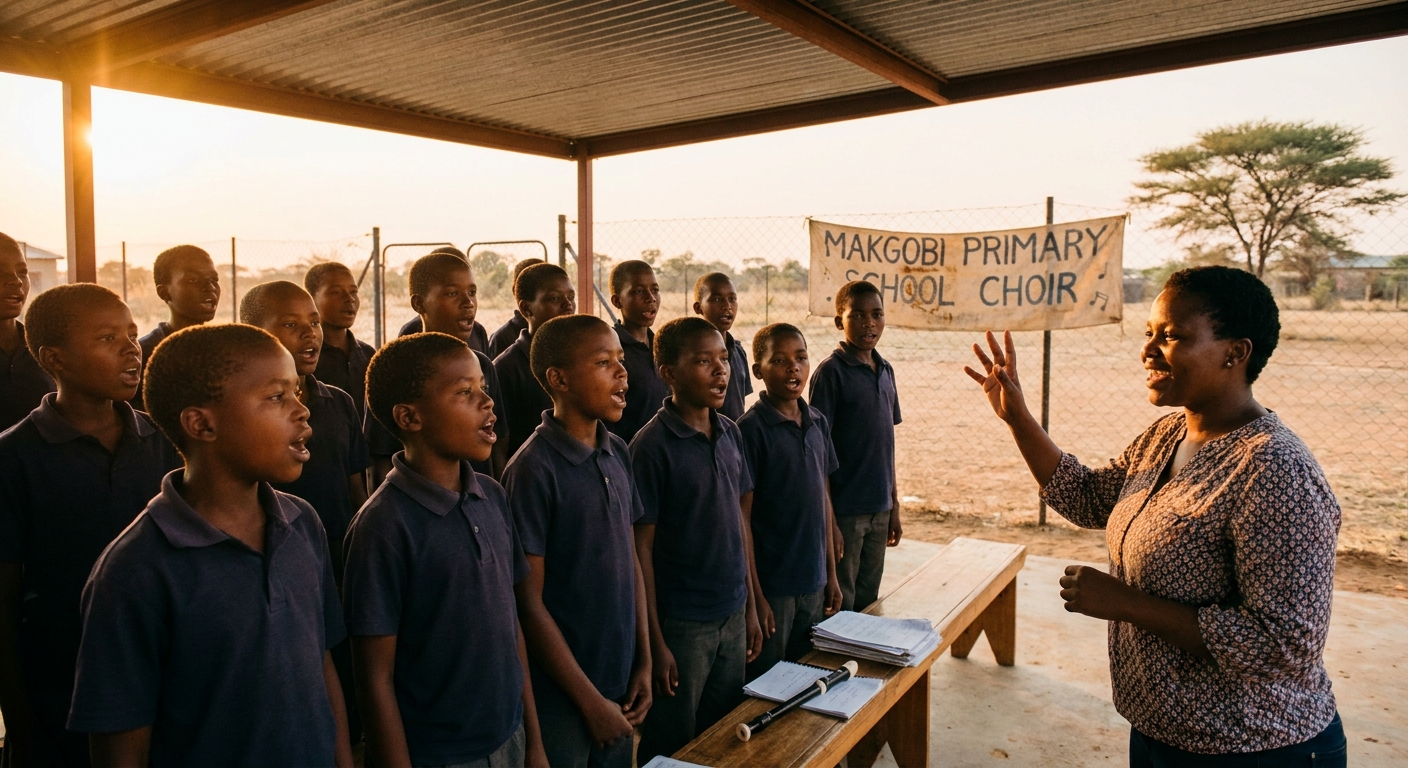
Choir, soccer, netball, reading club — volunteer-run on a termly roster.

14:30

Dismissal

Bus departs at 14h30. After-care available on roster days until 16h00.

Children gathered in a morning circle outside Learners queuing for the NSNP hot lunch Choir practising under the awning after school